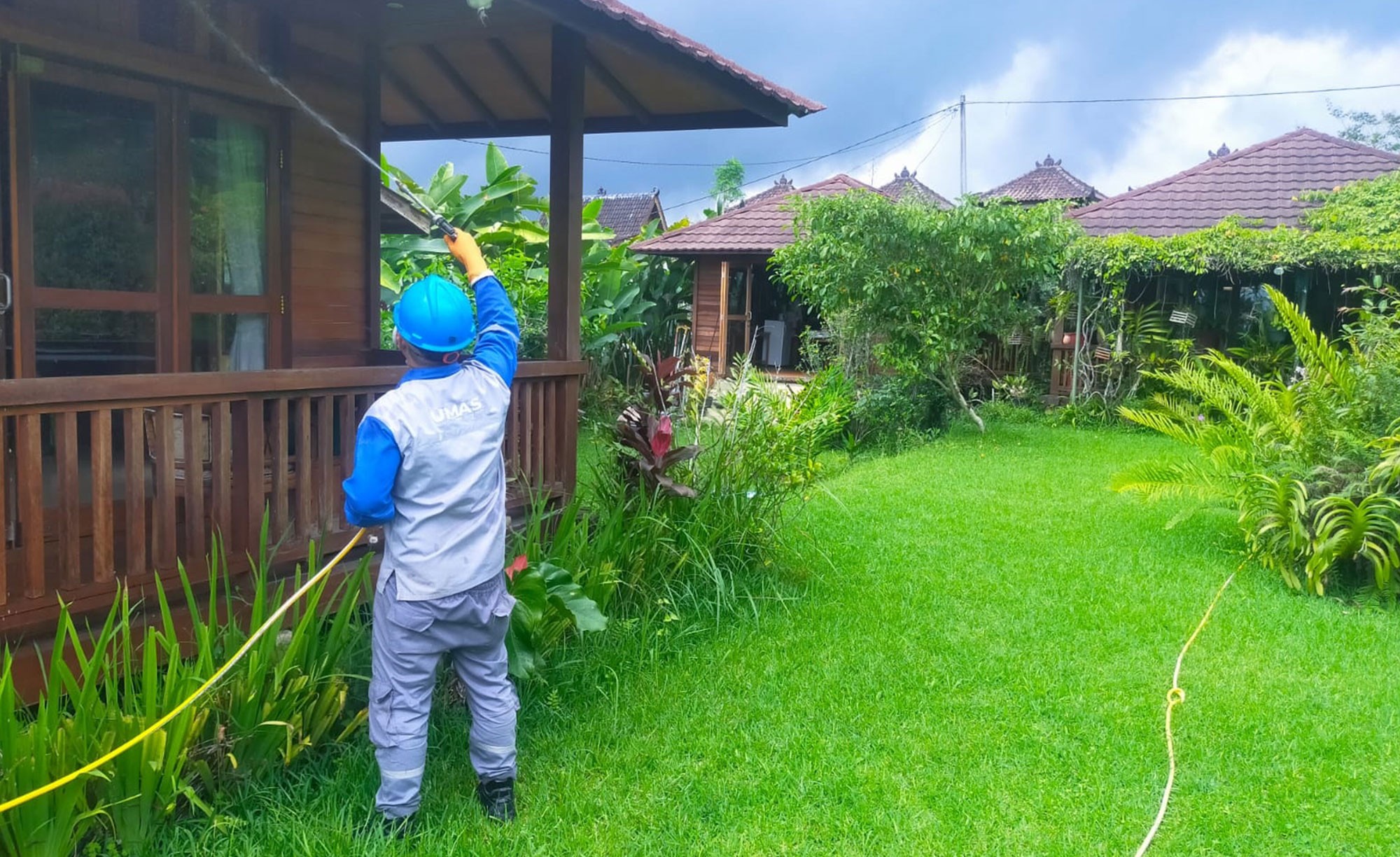
20 Great Suggestions For Choosing Termite Control Services In Jakarta
Wiki Article
Post-Construction Termite Barriers In Jakarta
Many Jakarta homeowners believe that termite barriers are built as the foundation remains exposed, prior to the concrete is laid and the walls rise. This is a costly belief. The assumption is that property owners have only one option once the slab has been cast: chemical trenching. This involves repeated application of termicides which are degraded in Jakarta's humid and alkaline soil. The advent of retrofit barrier systems which are constructed using perimeter excavation and mechanically fastened to existing foundations and foundations, has made this notion obsolete. Post-construction barriers aren't a poor alternatives to the pre-construction safety. Both methods have different performance profiles. Jakarta antitermite service providers who don't offer both techniques are not part of the fastest-growing segment of the industry of urban pest control.
1. There are many obstacles to retrofitting, and they are present
Installing a slow-release termiticide membrane, stainless steel mesh or bonded sand is possible against foundations already in place. The process includes perimeter excavation and removal of soil, and barrier placement. This is disruptive, costly permanent, and is an indefinite solution. Jakarta exterminators who inform clients that there is only one option: annual liquid injections are misrepresenting the current technology.
2. Liquid Barriers Degrade; Physical Barriers Do Not
Hydrolysis accelerates the degradation of pesticides applied to soil in Jakarta. High temperatures, intense rainfall and an alkaline pH during the wet months reduces the half-life of active ingredient by months. Physical barriers, such as sheets, mesh or stone graded, do not degrade. In year 10, their performance in excluding is similar to year 1. Chemical barriers offer a better value for money to customers willing to pay for lifetime protection.
3. The benefits of reducing moisture isn't widely recognized
Polymer sheet barriers simultaneously exclude termites as well as impede capillary water migration from the soil to the masonry. Drier foundations mean drier timber. Drier wood is indetectable. Termites won't attack wood they cannot detect. The service to combat termites that sells retrofits is selling two treatments for the price of one. They must include both of them in their proposals to clients.
4. Partial Perimeter Is Not a Barrier
Jakarta's urban density (party walls, adjacent constructions, paved roads) often hinders excavation of the entire perimeter. Underground bypass's physics is distorted by anti-termite firms that offer partial installations. The termites are able to walk around gaps. The correct word is "partial boundary intervention" and documented gaps in exclusion. Homeowners should know what remains unprotected.
5. Bekasi Adoption Signal
Jakarta's extended metropolitan area has already begun to implement physical retrofitting systems. Early adopters do not live in Menteng, Kebayoran or Kebayoran. They reside in Bekasi. Greenfield development has opened up accessible areas that are coordinated in their construction sequences. Jakarta exterminators who only monitor central Jakarta tenders are likely to miss the trajectory. The adoption of physical barriers begins in the towns of secondary importance and then moves to the north.
6. The Architect Specification is a winner over the Contractor Substitution
Emporio Architect & similar firms specify physical barrier systems now in the renovation documents. Anti-termite services are in the position of contractor in this value chain, however they do not control requirements. Pest control companies must be diverted from homeowners toward engineering firms and architects. Transaction economics is the selling of a retrofit property owner. Annuity economics is the process of being specified in an architect's master specification.
7. The curve for additive depletion favors Infused Chemist
Liquid Termiticides Applied to Soil are deposited on the surface and degraded after Day One. Polymer sheet barriers contain additives that are infused into the matrix during manufacturing Depletion only occurs near the exposed edges and follows a diffusion curve that is measured in years. Physical barriers come with a warranty that is practical and reliable. Five-year warranty on liquid barriers is speculative.
8. It is determined by access to excavation
Bucket accessibility is more important than budget in the case of barriers that are installed after construction. Mini-excavators require around 60 centimeters clear space next to the foundation. The properties with no-lot-line construction, shared driveways, or hardscapes that are firmly attached to the wall are ineligible. Access audits must be performed by anti-termite services providers prior to when they are able to quote and not during mobilization.
9. ESG Reporting creates Commercial Demand
Indonesian corporations that have committed themselves to sustainability, along with international tenants applicants for green-building certification, as well as Indonesian corporations with sustainability commitments currently track the embedded CO2 emissions. Broadcast spraying of liquid termiticides has been documented as a source of CO2 emissions. Physical barrier installation--one-time excavation, mechanical fastening, zero recurrent chemical application--qualifies as emissions reduction. Jakarta exterminators working for corporate clients in Jakarta have to disclose carbon equivalent disclosure, otherwise they lose bids to competitors.
10. Retrofit Barriers need different Warranties
Barriers constructed prior to construction are covered against termite intrusion into the barrier plane. Post-construction barrier systems do not offer this warranty, since the barrier is only enclosing a portion of the perimeter that is accessible. The warranty is actually "exclusions from treated zones" but not "protection to the entire structure." Homeowners who are misled into believing that they are secure are being fooled. Exterminators with detailed documentation of the installation in the home and the remaining vulnerable items can resolve more claims disputes and will retain more customers.
Also, you can read our conclusion.
Jakarta's termite barriers for post-construction sit at the intersections of three merging trends that have been documented as a degradation of soil-applied chemicals in tropical urban settings architects-led specification for permanent physical systems and corporate demands for pest control methods that integrate using carbon accounting frameworks. Anti-termite firms that define post construction protection as chemical trespassing aren't protecting their market share. They're protecting obsolescence. The equipment required--mini-excavators, core drills, mechanical fasteners--is capital-intensive but one-time. The training is highly specialized and transferable. Bekasi is the first city to be able to experience this new barrier-free era. In less than 24 months, it will reach Jakarta. Exterminators waiting for clients to demand capability before acquiring it will be able to enter the market within two years' time behind early adopters. They would be competing against established physical barriers contractors that have references installations and relationships with architects. It's a different decision to make about whether retrofitting capabilities for physical installations should be embraced. The question is whether to be the leader in this market or follow it. View the most popular jasa basmi rayap for website recommendations including rumah rayap, jasa pest control, rayap rumah, rayap pekerja, bahan lemari anti rayap, jasa pembasmi hama, anti rayap kayu, jasa anti rayap, kayu tahan rayap, pengendalian hama and more.

Fumigation Options For Termites Indonesian Villas, Such As Jakarta
Indonesian villa-owners have been trained to believe that tent fumigation is the only solution for termites living in subterranean areas that invade the walls, roofs and even embedded timbers. Fumigation companies cultivate this mindset and homeowners' anxiety sustains the belief. The tent descends and the neighbors complain, the family evacuates for three days, and the colony within the walls is killed. The colony that is in the garden, untouched by the gas, re-builds the foraging tunnels and returns to the structure within eighteen months. The structure is cleaned by fumigation, however the landscape reservoir remains untouched. For Jakarta anti-termite solutions that serve the villa market, offering options that are viable isn't charity; it is the best way to compete. Clients who own eight-bedroom villas located in Pondok Indah and vacation compounds in Puncak do not want tenting. They do not want tents, they just want the colony to be eradicated.
1. Fumigation Kills Termites Inside; Baiting kills the colony
Tent fumigation is a deadly gas concentrations to each void area within the structure's envelope. Each termite in the building dies. The colony that is in the soil below the garden, beneath the driveway, and beneath the neighbor's property, will not die. The colony dies when poison is delivered to the nucleus through trophallaxis. The colony will die. The structure becomes reinfestation-resistant because the source population is eliminated. Homeowners who are aware of this distinction rarely choose fumigation twice.
2. Heat Treatment Penetrates Where Gas Cannot
Whole-structure heating treatment can raise the internal temperature of timber to fifty degrees Celsius, sustained for one hour. This kills all life forms including eggs, doesn't require tenting, and does not leave any chemical residual. Heat treatment is suitable for Indonesian villas with intricate carvings, heritage wood and exposed beams. The equipment is available. Contractors exist. The issue is not technology; it is a homeowner's awareness of the fact that alternatives exist.
3. Electro-Gun Technology - Localized Infections
Microwave devices emitting high-frequency radiation stimulate the water molecules of wood to generate lethal heat. They do not affect other materials. Villa owners who find termites active in the wood of a single door frame or single roof truss can apply electro-gun treatments in order to get rid of the infestation within one visit, without having to evacuate their home. Jakarta exterminators are not importing this technique because it's not a new technology.
4. Wood Injection Systems Preserve Architectural Fabric
Capillary action permits liquid borate formulations to move through timber when injected under pressure. This renders the whole substance intoxic for years. The drill holes are tinier when compared to the existing nail holes. The carving is still unaltered. The door frame remains in its place. Indonesian homeowners often refuse the treatment due to exterminators recommending the treatment after having previously proposed replacement. Accepted when offered before replacement.
5. Baiting above-ground for hidden cavern colonies
The most common method of fumigation that is used when Coptotermes Gestroi builds an aerial nest in the wall cavity or roof void is tent fumigation. Above-ground stations which are connected to the mud tube active arising from the ceiling's baseboards and lock them onto them deliver toxicant direct into the nest. As the construction workers return through the baited tubes they are sucked up by their own nest. There is no tent. No evacuation. Six to eight weeks.
6. Nitrogen Freezing for Small-Scale Heritage Components
The termites are quickly frozen when liquid nitrogen is circulated inside sealed chambers that surround the wood. The cycle of freezing and then thawing is repeated. It's not baiting chemically but rather cryogenic. Villa owners who have isolated infestations within museum-quality Javanese carving or furniture that is antique, nitrogen freezing preserves the patina which heat treatment might darken and the injection could cause spots to stain.
7. Installing a barrier that is physically anchored to stop reinfestation
The home that is constantly smoulders without ever installing physical barriers is renting temporary sterilization. Retrofitting polymer or stainless steel mesh with the perimeter excavation will prevent subterranean insects from re-entering the structure after colony elimination is complete. Fumigation options are best when they are paired with a permanent exclusion structure. Make the combination available for sale. Eliminate an active colony with baiting, and then install barriers to ensure that there is only one colony that will ever live in the structure.
8. Carbon Dioxide Purging for Enclosed Spaces
When introduced to sealed crawlspaces or attic spaces under pressure, carbon dioxide displaces oxygen in them, which causes termites to die. It is only necessary to tent the area in a partial way, and not a full building enclosure. CO2 is a gas which dissipates rapidly, doesn't leave any residue, and poses no risk to the inhabitants in the event that re-entry protocols are followed. The fumigation process for Indonesian villas isn't necessary when termite activity on roof structures is minimal.
9. The Baiting Timelines need to be disclosed upstream
Fumigation kills termites colonies within 72 hours. Baiting can kill the colony within six to eight weeks. The pace of tenting is too rapid for the villa owners who are familiar with it. If the timeline is disclosed before contract execution is considered a bargain to prevent evacuation. Jakarta anti-termite companies that cover up the baiting timeframe after the proposal is accepted create their own issues by charging close rates.
10. The Reservoir Colony must be Identified.
Each villa in Jakarta is within the range of at least one colony parent within a nearby green space or cemetery, or on undeveloped land. Fumigation ignores this colony. The colony is not affected by heat, injections, treatments or baiting, in the event that it is outside the perimeter of the structure. Landscape baiting grids offer a comprehensive fumigation alternative that targets the external colony that could re-infest your villa in 18 months. The exterminator that treats the structure but does not treat its reservoir is only offering temporary relief.
Conclusion
Indonesian villa owners don't want to leave. They do not wish to set up tents on their lawns that are well-maintained. They do not wish neighbors to inquire if the property is plagued. What they really want is to eliminate the colony and get the certainty that the colony will never be back. Fumigation achieves the first goal reliably and the second objective not at all. Using integrated protocols in contrast to alternative options like baiting and the use of microwave technology, heat treatment, nitrogen freezing, wood infusion or CO2 purging will achieve both of these goals. Jakarta anti-termite firms that advertise themselves as alternatives to fumigation, bringing diverse elimination methods, providing the necessary training for technicians to use the selection of specific species-specific protocols, and documenting prevention results--will capture premium villa segments currently held by tenting contractor. The equipment investment is significant. The training investment continues. There is a demand in the market. Villa owners are searching for "fumigation alternatives Jakarta" frequently. It is crucial to know which exterminators with alternative protocols will appear in the results search engine and those that will go with tents. Take a look at the most popular anti rayap jakarta for site info including pembasmi rayap, pembasmi rayap kayu, membasmi rayap, bahan lemari anti rayap, jasa anti rayap surabaya, lemari anti rayap, kayu tahan rayap, pembasmi rayap kayu, cara membasmi rayap di lemari, jasa anti rayap jakarta and more.